
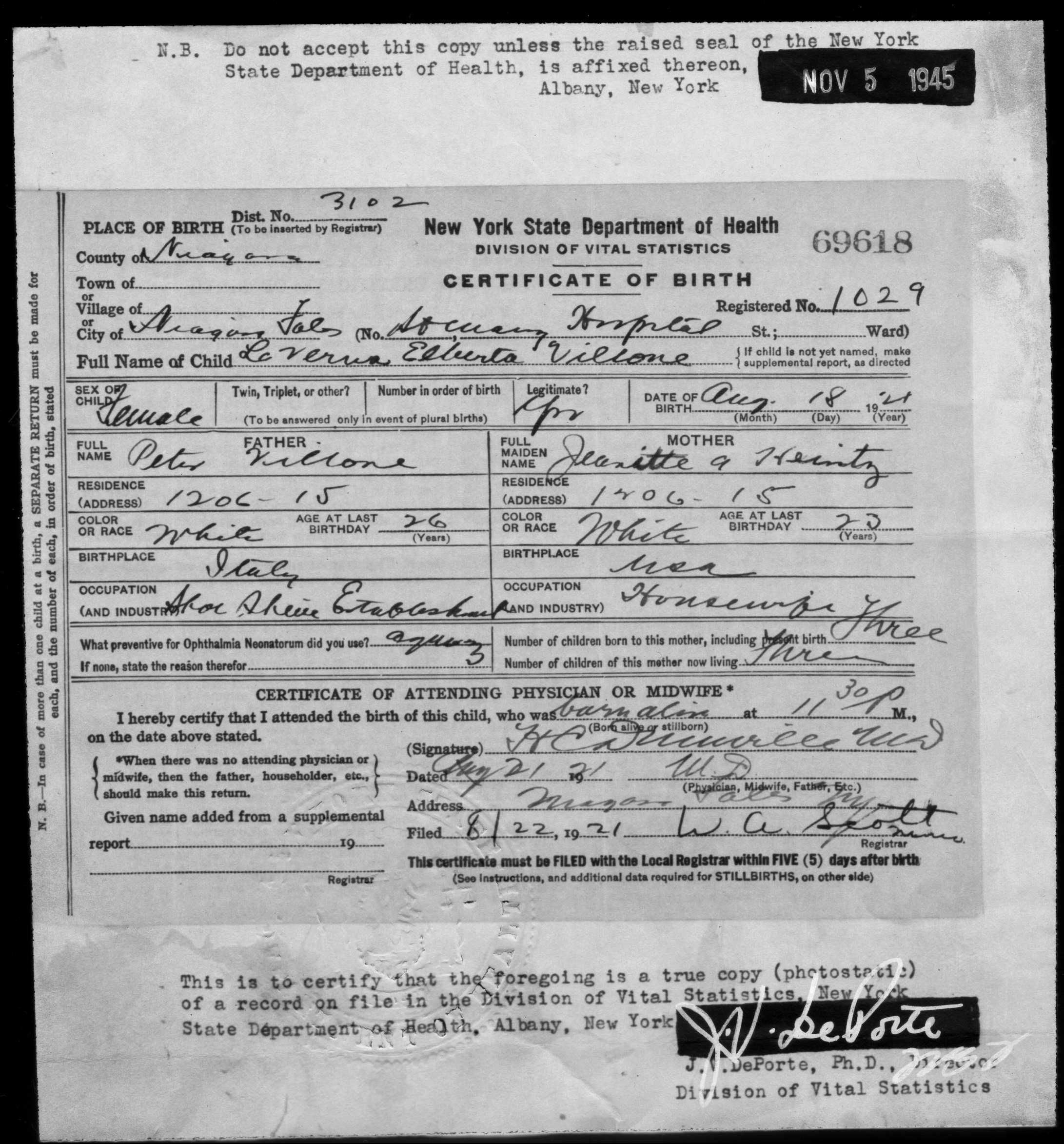
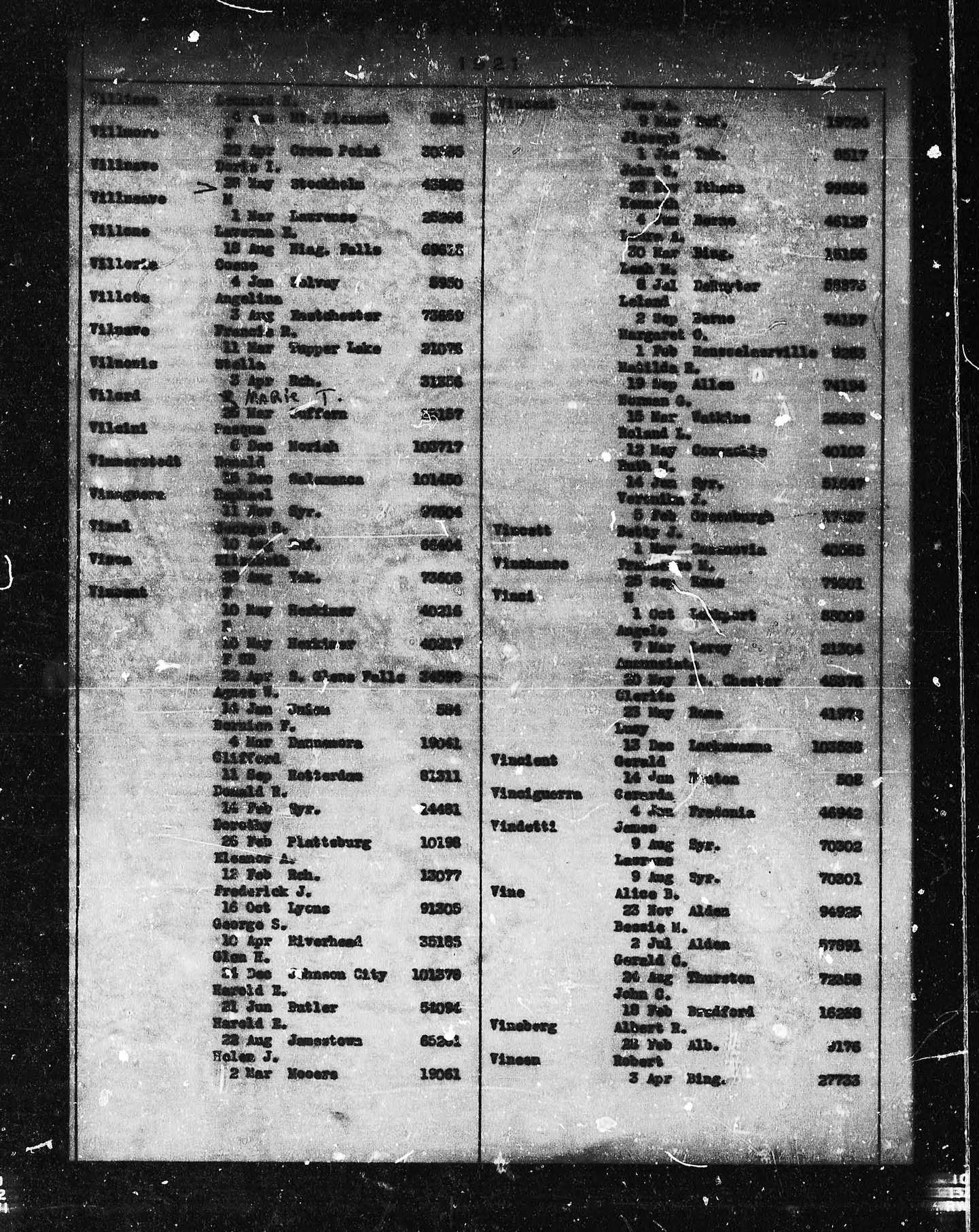
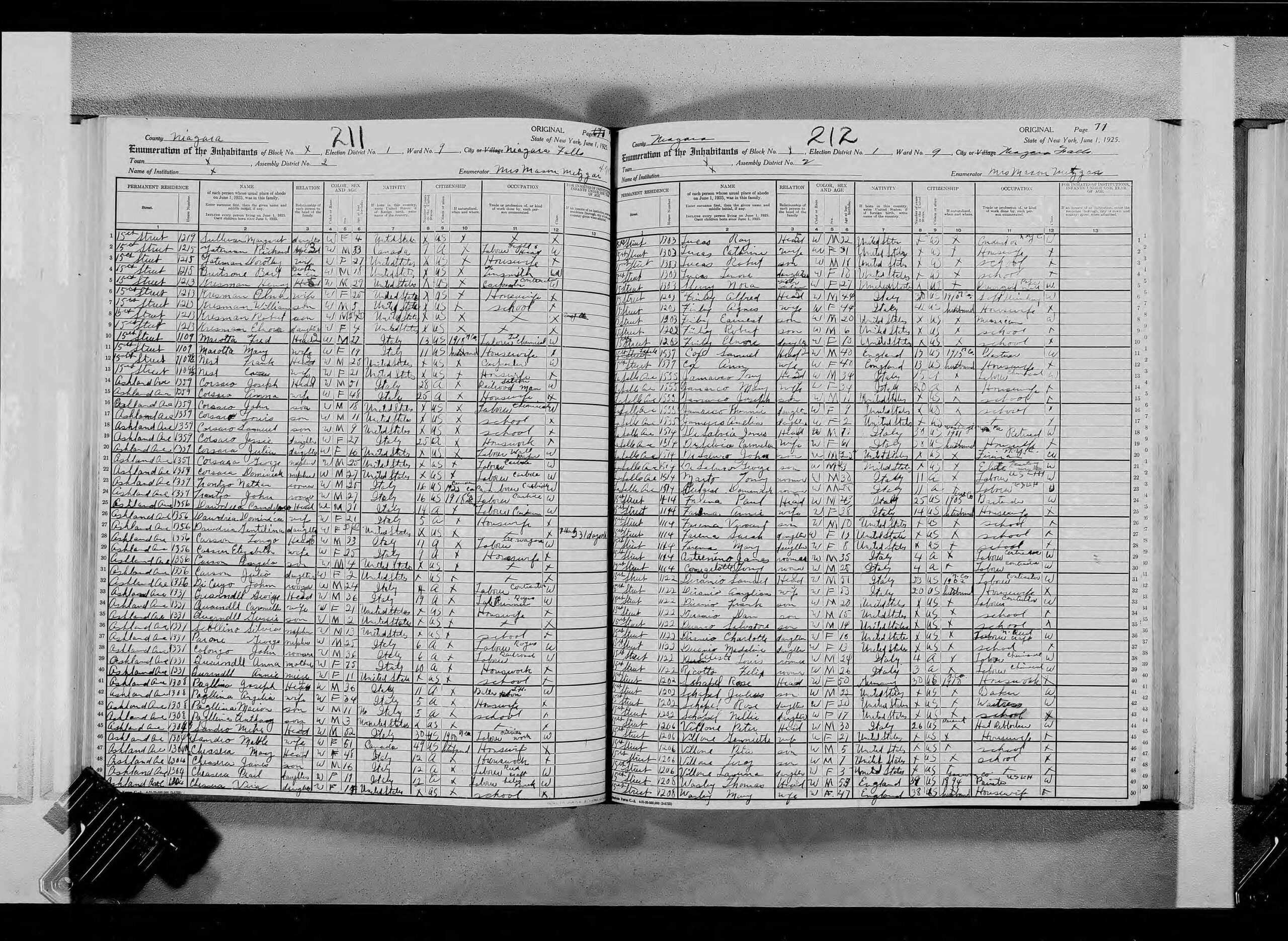
The industrial city of Niagara Falls, New York, was known for its massive hydroelectric plants and steady stream of tourists when LaVerna Elberta Villone was born there on August 18, 1921. At that time, Niagara Falls was a center of manufacturing, powered by the rushing waters of the Niagara River. Many families lived in modest wood-frame homes heated by coal stoves. In the early 1920s, childbirth was transitioning from a private home event to a hospital procedure, though many mothers still relied on local midwives and family doctors who made house calls. Infant care involved simple, homemade remedies, and mothers washed cloth diapers by hand using heavy washboards and galvanized tubs. LaVerna grew up in this environment of steady work and close-knit neighborhoods, where the constant, distant roar of the great waterfalls was a familiar background sound of daily life.
During her youth, the nation experienced the economic struggles of the Great Depression. Families learned to stretch every dollar, grow vegetables in backyard gardens, and mend their own clothes. Despite these challenges, communities found ways to gather for inexpensive amusements, such as listening to radio programs, attending church socials, or visiting local parks.
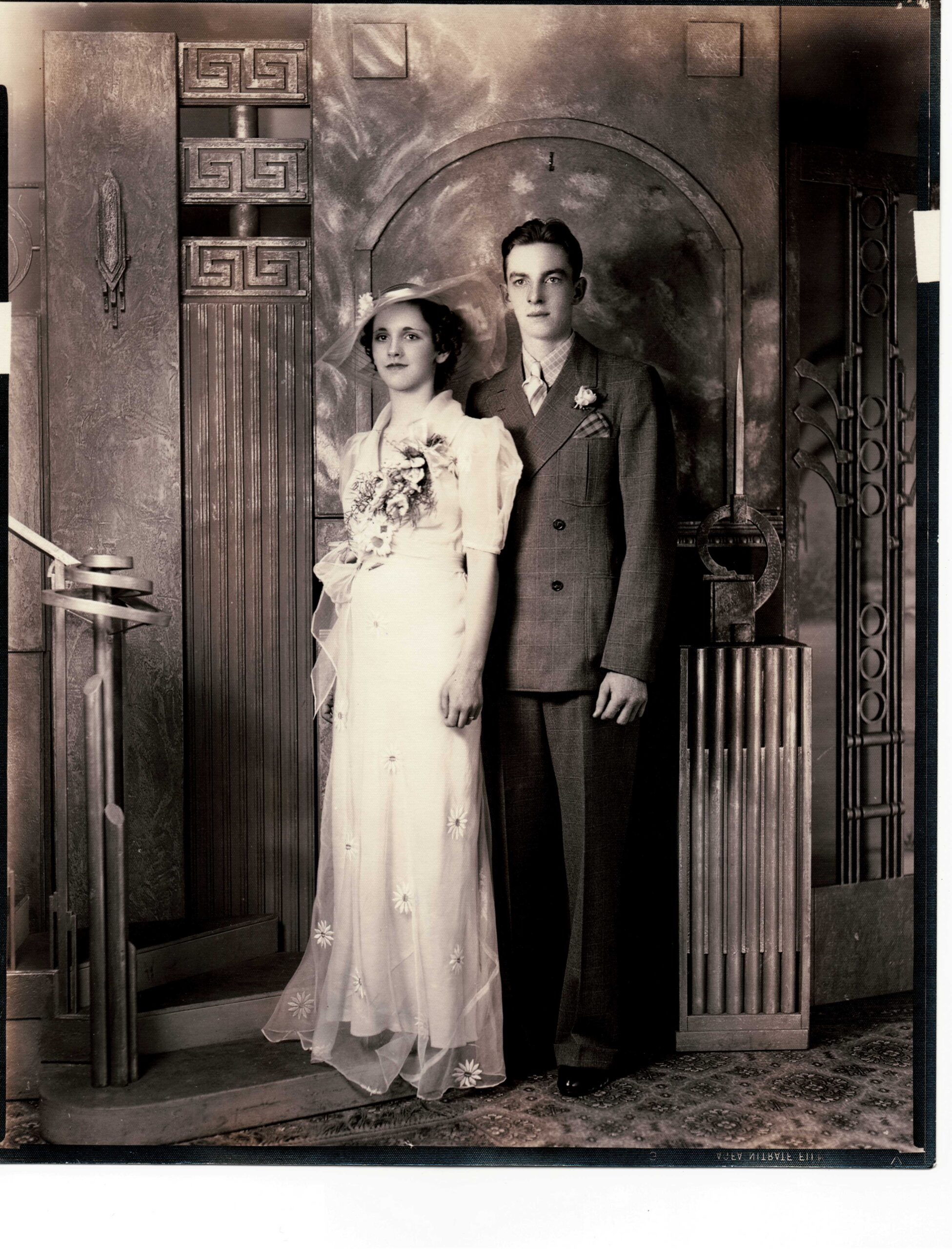
Marriage to Lyle Daniel Van Volkenburg in Erie, 1937
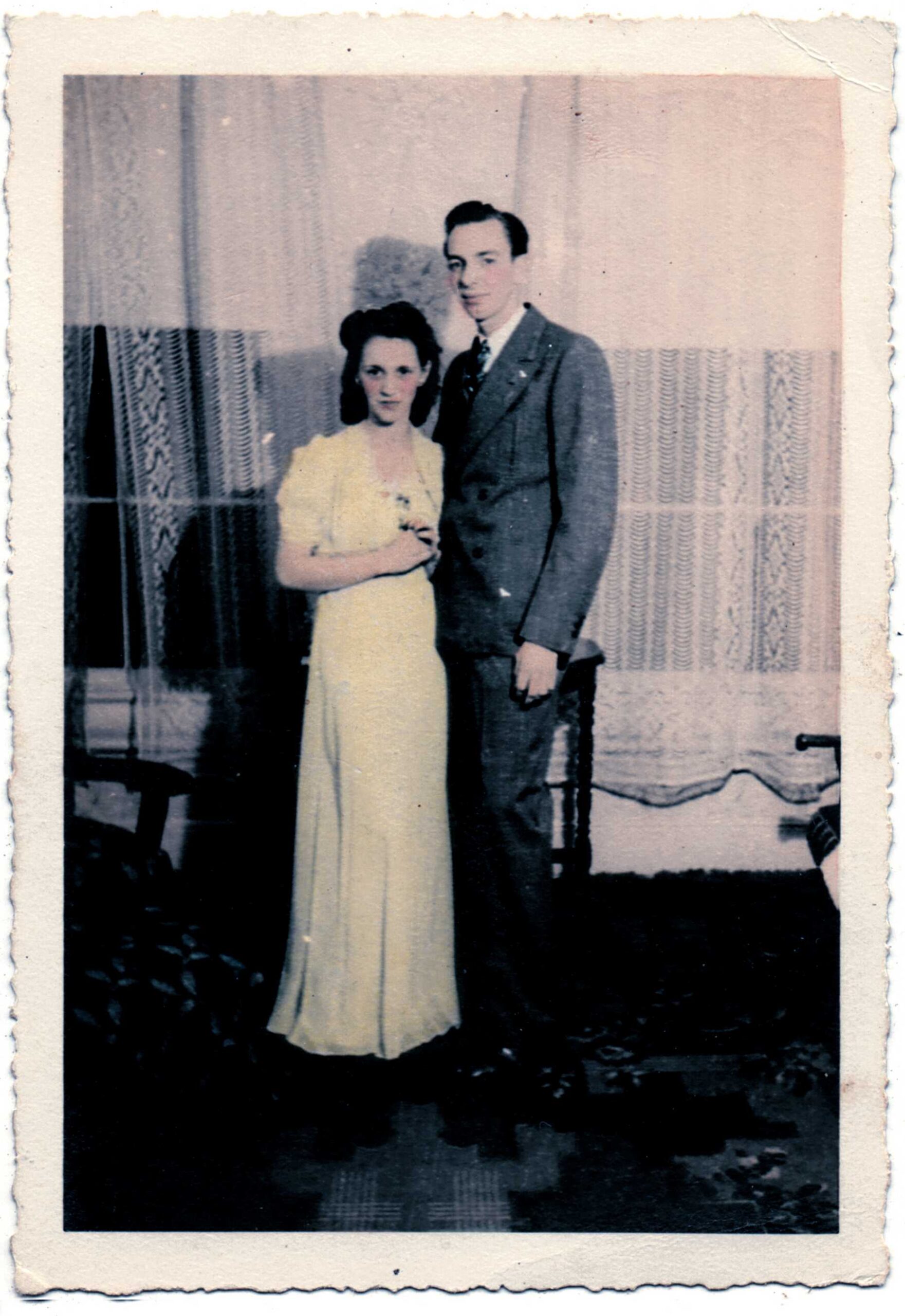
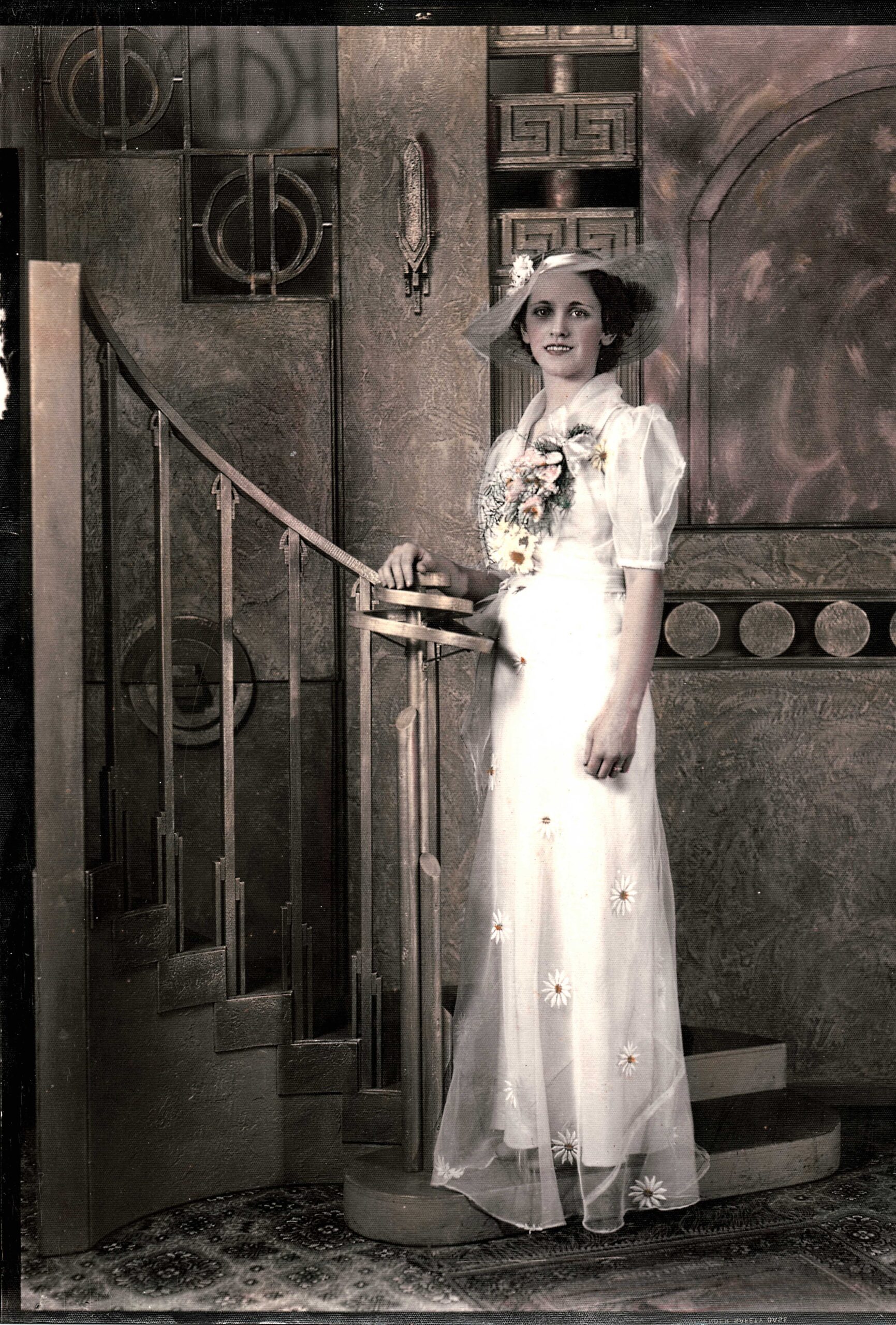
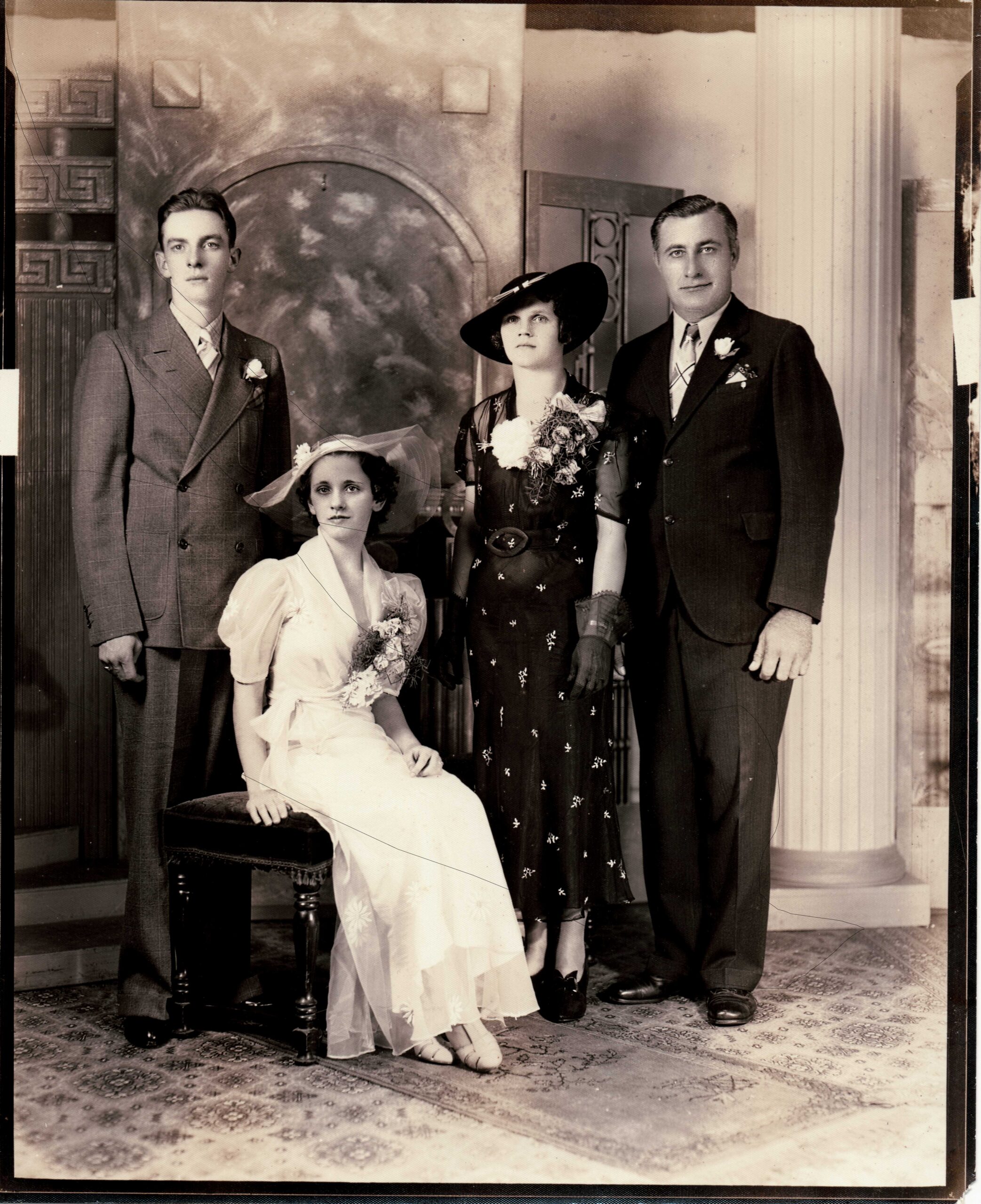
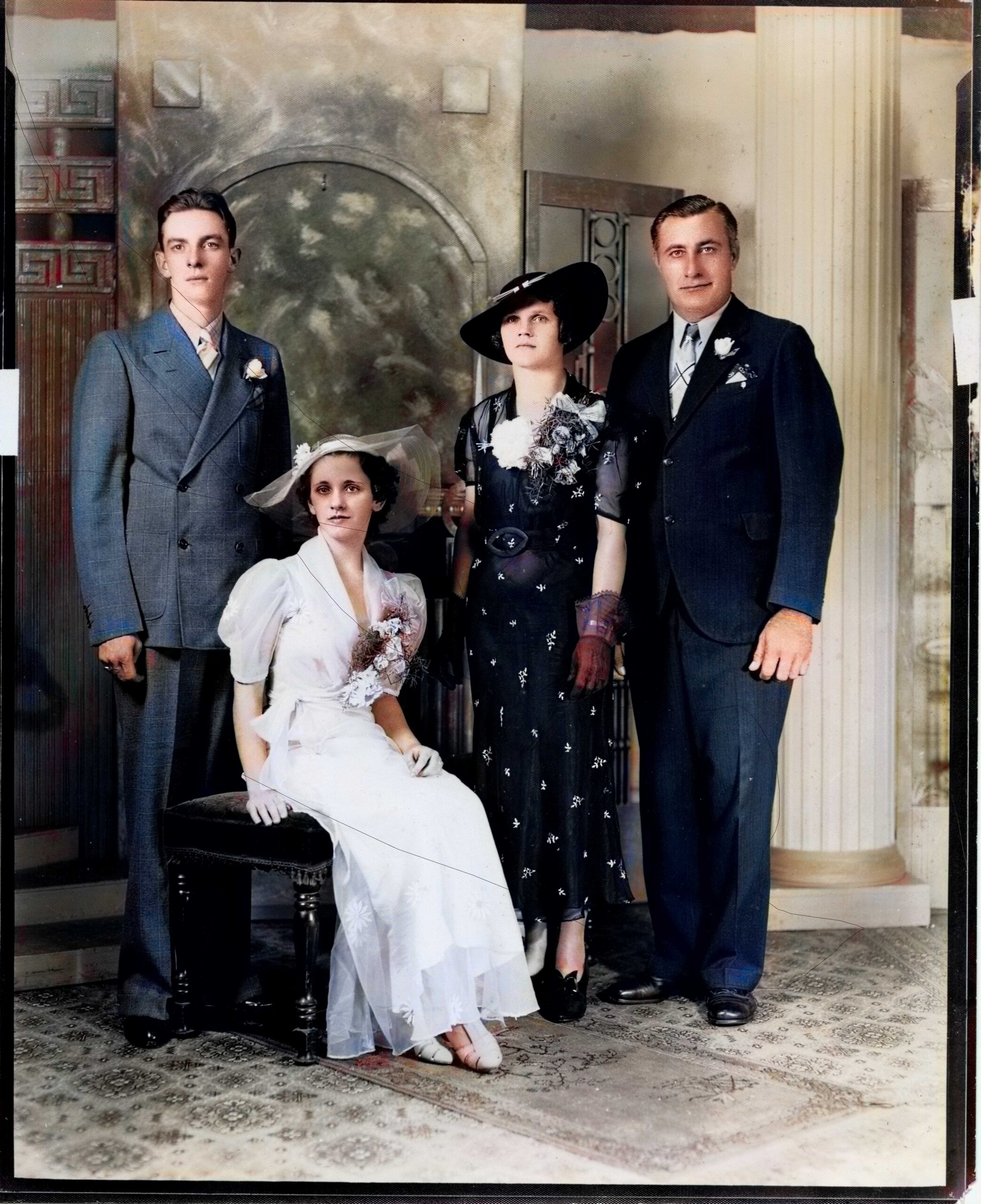
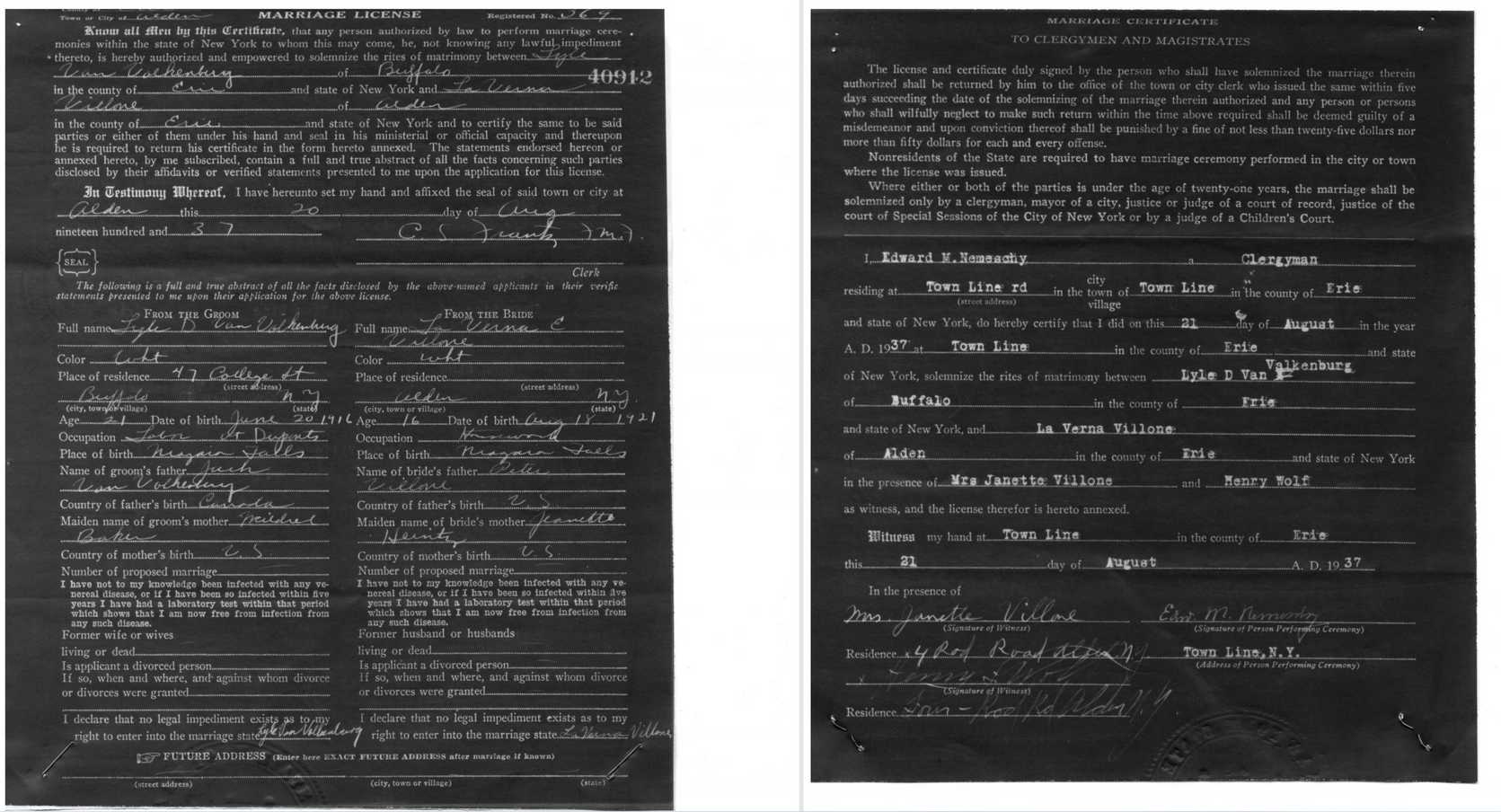
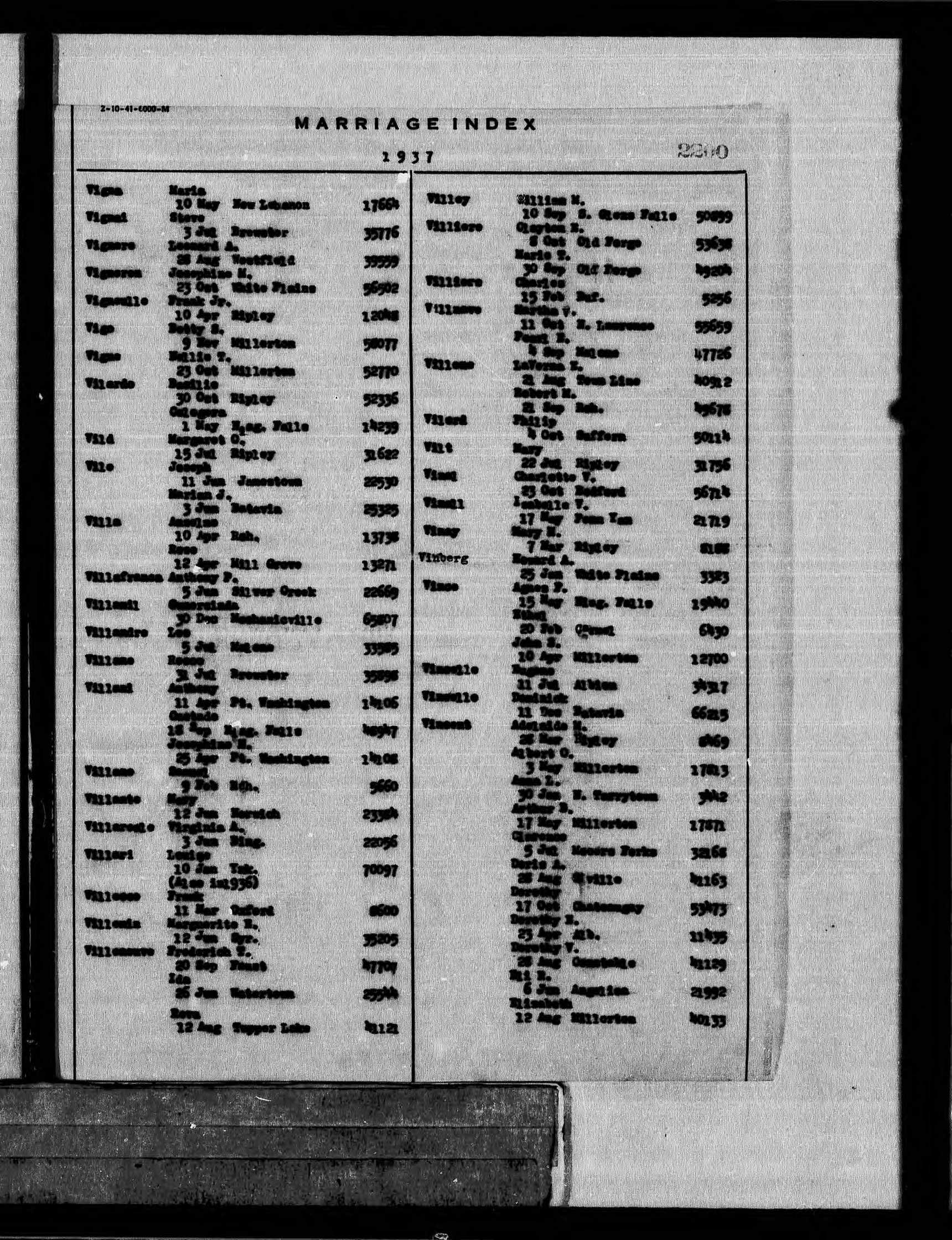
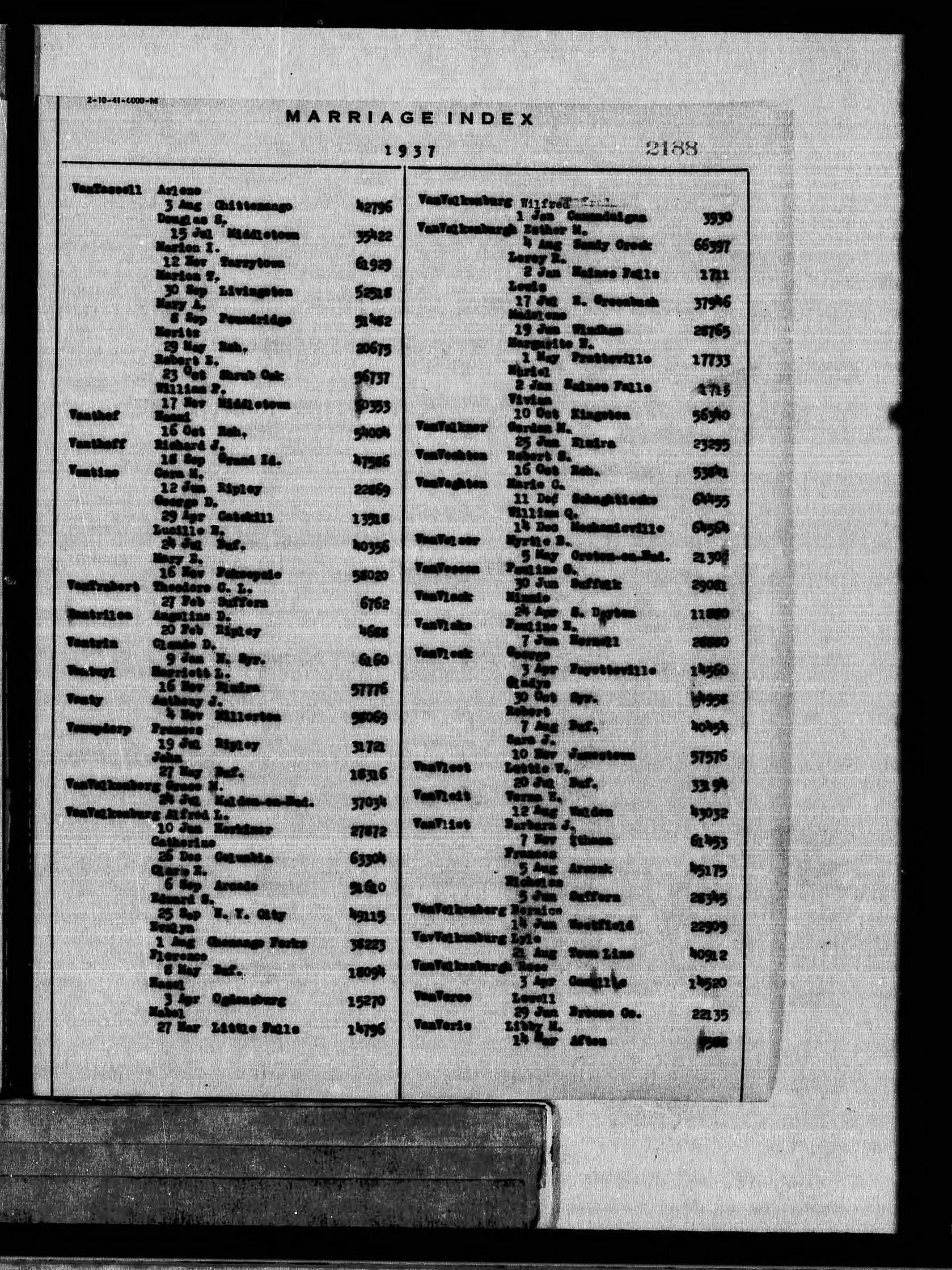
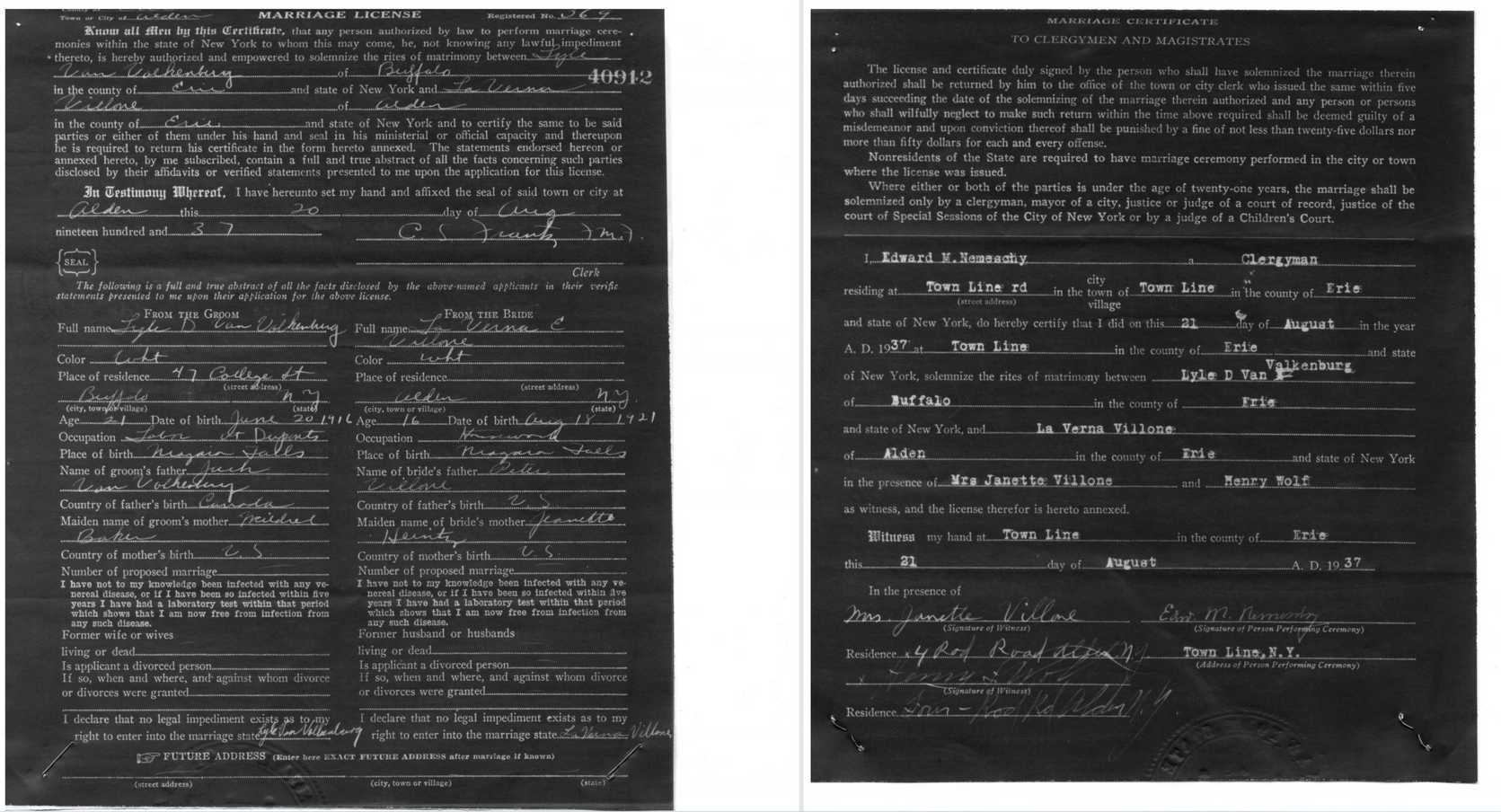
As a young woman, LaVerna Elberta Villone met Lyle Daniel Van Volkenburg, who had also been born in Niagara Falls. The couple decided to marry, and their wedding took place on August 21, 1937, in Erie, New York. In the late 1930s, weddings were typically simple, family-centered affairs. Many couples married in the rectory of a local church or in the living room of a relative, followed by a modest reception with cake and punch. Newlyweds often started their households with secondhand furniture and basic kitchen tools, focusing on practicality as they began their lives together.
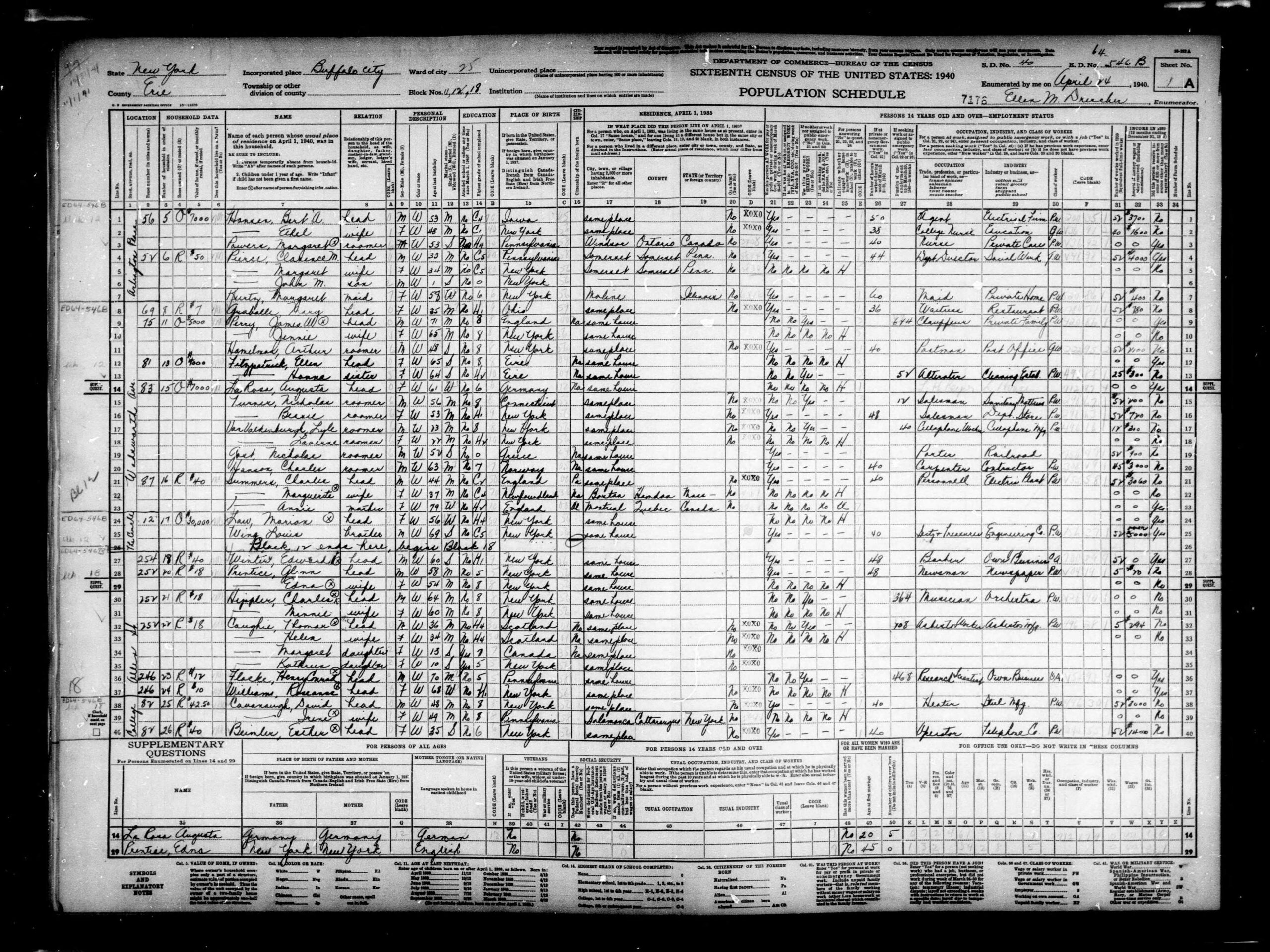
The young couple soon moved to the city of Buffalo, New York. On March 7, 1938, LaVerna gave birth to their first daughter, Nancy Carol Van Volkenburg. At that time, Buffalo was a major shipping and manufacturing hub on the Great Lakes, filled with steel mills, grain elevators, and busy neighborhoods. Daily life in Buffalo involved navigating cold, snowy winters and relying on coal furnaces to keep homes warm. Milk was still delivered to doorsteps by horse-drawn wagons or early delivery trucks, and neighbors often chatted on front porches during the warm summer evenings.
Family Life in Alden and the War Years, 1942–1945
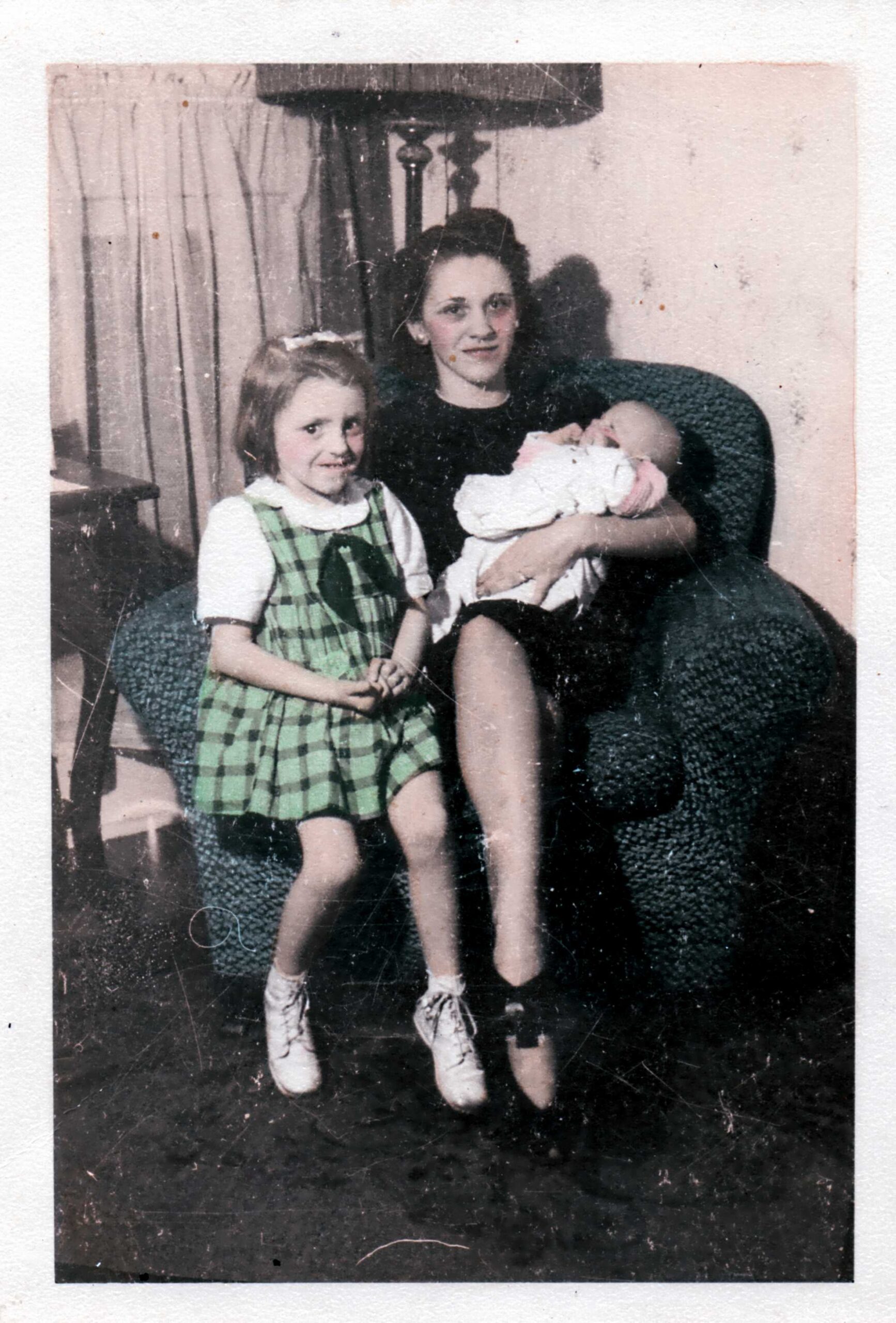
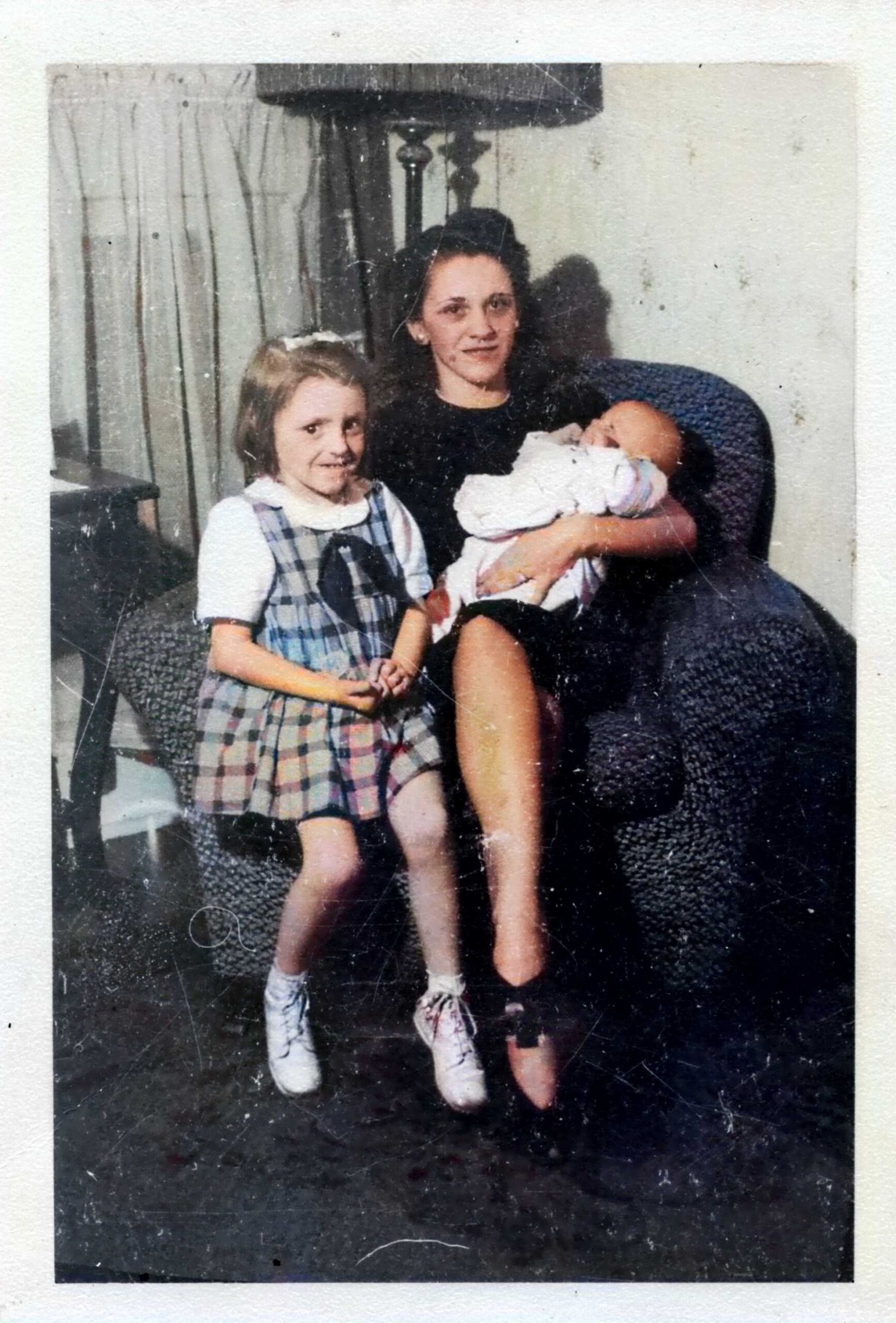
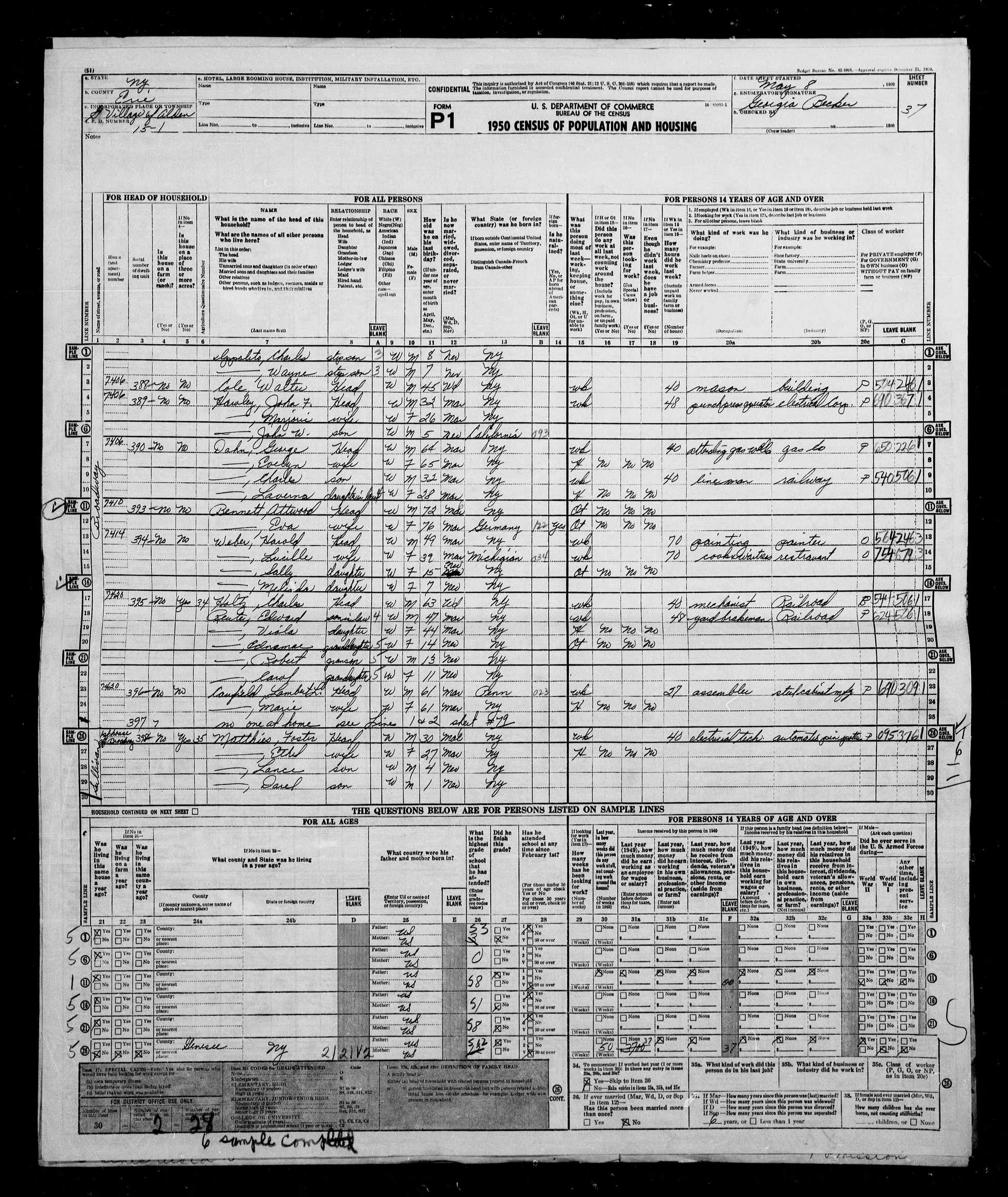
By the early 1940s, the family resided in Alden, a community located in Erie County, New York. On January 9, 1942, just a month after the United States entered World War II, LaVerna gave birth to her second daughter, Darleen Vanvolkenburg. Raising young children during the war years required adaptability and resilience. The federal government instituted strict rationing on everyday items such as sugar, butter, meat, gasoline, and shoes. Homemakers like LaVerna had to manage their households using red and blue ration points, often finding creative ways to cook nutritious meals with limited ingredients.
The war eventually separated the family. Lyle served overseas and was stationed in India toward the end of the conflict. On September 5, 1945, just as the war was officially drawing to a close, Lyle died in Alipore, Gujarat, India. The news of his death traveled slowly across the ocean to New York.
The war ended with sudden loss. LaVerna was left to care for her two young daughters, Nancy and Darleen, who were only seven and three years old.
Later Years in Buffalo, 1985
In the decades that followed, LaVerna continued to live and raise her family in the Western New York region. She witnessed many changes in the Buffalo area as the post-war manufacturing boom gave way to suburban expansion. Highways were built, television sets became standard in every living room, and supermarkets replaced the small corner grocery stores of her youth. Her daughters grew up, married, and eventually moved to other parts of the country, including North Carolina and South Carolina.
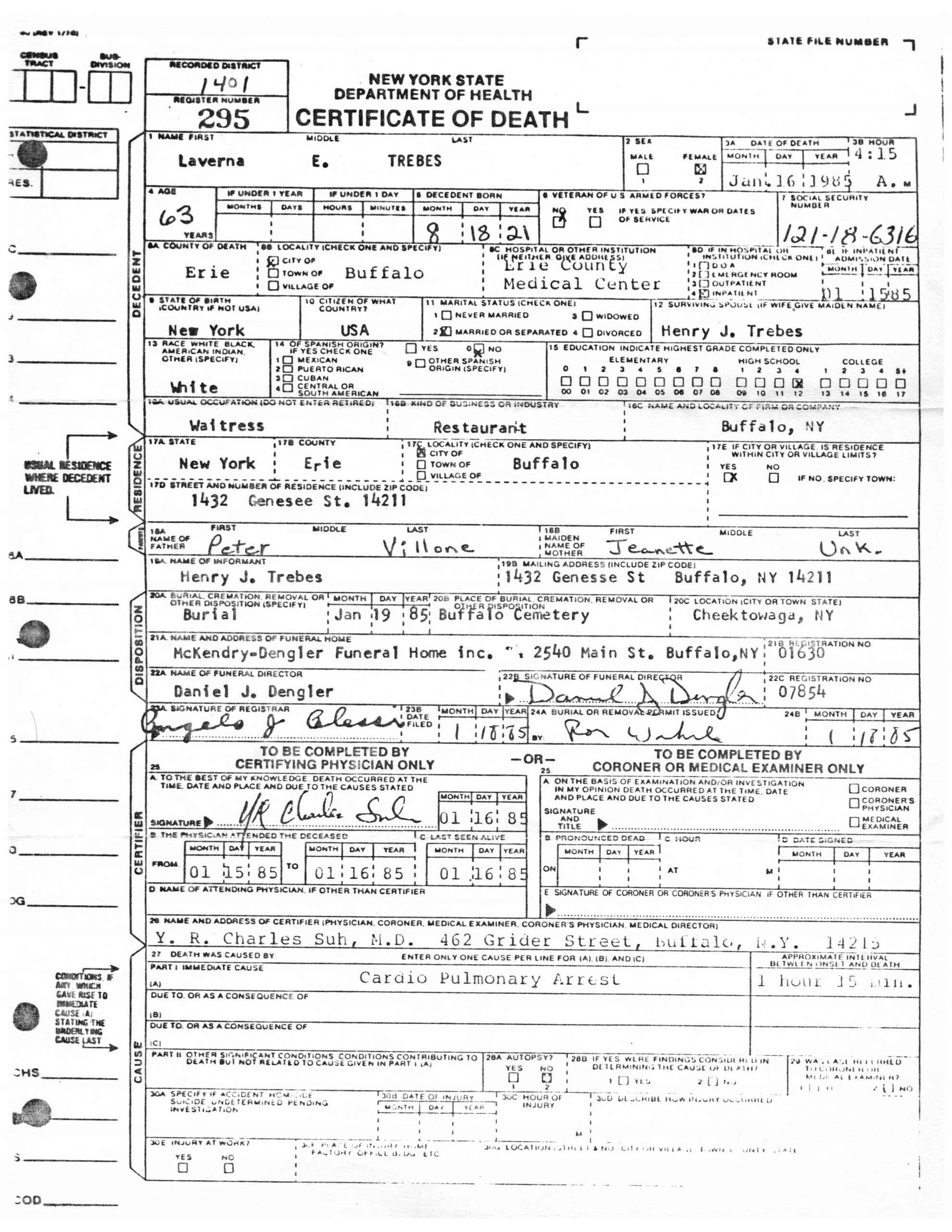
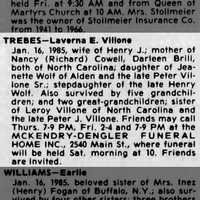
LaVerna Elberta Villone spent her final years in Buffalo. By the mid-1980s, medical care had become highly specialized, with modern hospitals offering advanced cardiac care and diagnostic technology. When LaVerna passed away on January 16, 1985, in Buffalo, funeral customs had also evolved. Traditional viewings at local funeral homes allowed friends and neighbors to gather, share memories, and offer comfort to the family before a formal service. She was laid to rest in her home region of Western New York, where the cold winter winds blew across the landscape she had known for over sixty years.
AI-generated biography: This article was generated with artificial intelligence from family-tree facts and general historical context. It may contain inaccuracies or omissions. Please verify names, dates, places, and relationships against original records before relying on or citing this narrative.
Comments (0)
No comments yet. Be the first to comment!